













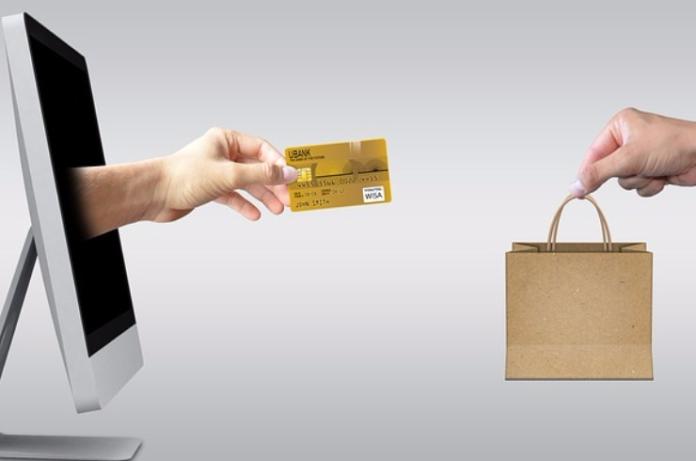
Consumers are embracing the technology offered by virtual cards, as Standard Bank starts to see the benefits of online shopping ecosystem, nine months after the launch its virtual card proposition.
In the past nine months, virtual card payments have increased by more than 300%, though they started off at a very low base.
A virtual card allows consumers to shop online and access their favourite Apps. It further allows them to make payments without using a debit or credit card.
Gwenael Trotel, Standard Bank’s Head of Consumer Solutions and Digital Cards says: “The adoption of virtual card technology is playing its part in changing the thinking about online shopping. Convenience and safety considerations are re-shaping the way consumers choose to transact, and Standard Bank is excited about the role it is playing in the digital and experience economies”.
Online retail spending currently accounts for less than 2% of retail spend in South Africa. As this number is expected to increase in the next few years, so is the use of virtual cards set to surge exponentially.
Standard Bank has noted interesting usage trends when it comes to online shopping. Consumers are increasingly using ride hailing services as well as purchasing online vouchers with the likes of Google, Amazon and Microsoft. Travel spend, which includes online airline and hotel bookings, has also seen a healthy increase. Online retail shopping, while still lagging some of the big ticket virtual card spending items, is also showing a healthy usage increase amongst customers.
These insights are what led to the bank entering into partnerships with the likes of Uber, Travelstart, Zando, Admyt and Takealot, along with a generic virtual card. Consumers are also making use of these partner cards to save money on a weekly or monthly basis until such a time they can afford to make a purchase of their choice.
Standard Bank has also noted a trend in which parents are loading their virtual cards for children in order to manage their textbook, discretionary school and varsity spend. Small business owners use the generic virtual card to control online payment of bills by their staff, and to also avoid giving out personal credit card details.
Trotel says: “Increased adoption of virtual cards is really driven by a few key factors. Virtual cards allow consumers to be part of the virtual economy without having access to the traditional mode of purchase, namely a credit card. Cards are created on the Standard Bank mobile banking App and loaded with funds as and when needed. For those ultra-security conscious consumers, it adds an extra layer of security in that funds can be loaded for the exact amount required to purchase. Cards can also be created and deleted at any time. Virtual cards have extended the control the user has over not only payments but also the card itself. Virtual cards also allow for a convenient platform for general saving or savings for discretional spend.”
Standard Bank customers are able to create virtual cards within the bank’s mobile App. There is currently a choice of six cards, a Generic Virtual Card which can be used across all e-Commerce retailers and five partner cards that allow virtual transactions at Takealot, Travelstart, Zando, Uber and Admyt. Cards can be used on any local and international websites and Apps. This will allow our customers to shop globally, safely and conveniently with online giants such as Amazon, Apple, Netflix or Wish should they choose to do so.
Once a card is created, customers will be given their 16-digit card number, CVV and expiry date. These cards can be topped up in real time with funds from a current account, savings account, or credit card and thereafter used to transact online.