








Macassar Wastewater Treatment upgrade doubles capacity
By Staff Writer
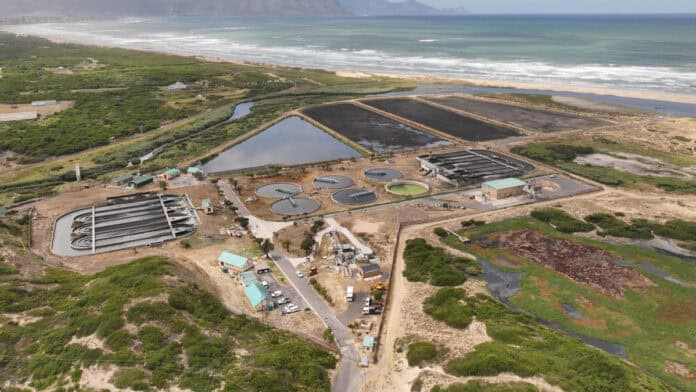
THE government has committed to investing R4 billion to upgrade the Macassar Wastewater Treatment Works in the national budget as part of the efforts to prevent a severe water shortage seen 10 years ago in Cape Town.
The upgrade will double the wastewater treatment capacity from 34 million litres per day to 80 million litres within the Macassar sewerage catchment to meet both current and future demand through the refurbishment and extension of the wastewater treatment works.
News of the upgrade came soon after the City of Cape Town announced it was planning to build a Water Desalination Plant that would yield a minimum of 50 million litres/day of desalinated water from sea water to potable water.
The government committed R2.5 billion to develop the plan in the budget.
Aside from the planned upgrades to the Macassar plant and the creation of the desalination plant, the City of Cape Town is also in the process of investing R5.2 billion in upgrading its Potsdam wastewater plant in Milnerton, which will benefit about
75 000 households. Once complete, its capacity will be doubled from 47 million litres to 100 million litres per day.
The City is also scoping further upgrades to the Zandvliet water treatment plant which will be
completed by 2039.
The upgrading of the water treatment plants and the development of the water desalination plant comes as the city is seeing its population grow rapidly in recent years. Its population grew from 4,4 million in 2019, to 5,1 million in 2025, and this figure could grow to 8,4 million by 2050, according to the City’s Cape Town 2050 report.
The report said the City needed to diversify its water sources away from surface water to remain resilient in the face of climate change. In 2015, severe drought saw the City of Cape Town almost reach “Day Zero” where it would effectively run out of water.
Since then, it has introduced the New Water Programme (NWP), which aims to add 300 million litres of water a day from new sources by the end of 2031. This will see it move away from using dams and more to seawater desalination, groundwater extraction and water reuse to source water.
The NWP also included activities like the removal of invasive alien species, which in a six-month period, saw 6.1 billion litres of water replenished and making its way to the regions dams. This is equivalent to 44 million litres more water per day, gained from removing non-indigenous plants.
The region’s dams can only provide two years of water security, and the implementation of the NWP would provide much needed further sources of water.
The city, province and the national government are also working together to increase the flow of water to the Voëlvlei Dam. This would see the Berg River-Voelvlei Augmentation Scheme (BRVAS) project provide a boost to Cape Town’s water supply by extracting 23 million cubic metres of water annually from the Berg River. To maximise efficiency, BRVAS leveraged existing infrastructure where possible. This included utilising Voëlvlei Dam, established water treatment works, Cape Town’s existing pipeline from the treatment plant, and facilities managed by the West Coast District Municipality.