













One of Cape Town’s oldest buildings and a national landmark, the Old Granary Building has undergone refurbishment and now houses a permanent installation in honour of the Desmond and Leah Tutu Legacy Foundation (D<LF).
The Old Granary was constructed between 1808 and 1813, and is one of the city’s most important architectural buildings.
Major refurbishment work began in 2016 as part of the City’s commitment to restoring significant historical structures in Cape Town.
The City’s vision was to restore the Old Granary’s external façade and rehabilitate the internal spaces carefully in order to preserve the building’s discernible heritage.
Mayoral Committee Member for Assests and Facilities Management James Vos says, “The internal spaces … have been well-preserved [in order] to showcase the building’s heritage status … All aspects … down to the original cracks and chips in the floor and on the walls were preserved, which is what gives this building its unique character.”
Specifically redeveloped for the D<LF, the building is being used as an office space, a peace centre, an archive centre, and a museum. The D<LF exhibition is currently open and contains original handwritten manuscripts and memos of Archbishop Desmond Tutu.
Vos comments on the importance of sharing the history of Tutu.
“The manuscripts and memos of Archbishop Tutu gives one a nostalgic peek into the psyche of another one of South Africa’s most learned stalwarts of our time,” he says.
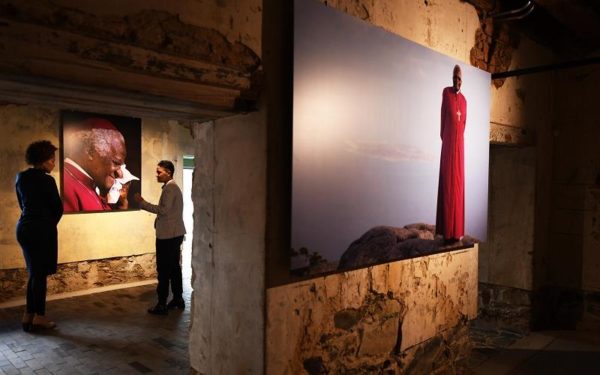
The City has also created a permanent exhibit that showcases the history of the Old Granary, its uses and functions, along with a detailed description of the restoration process.
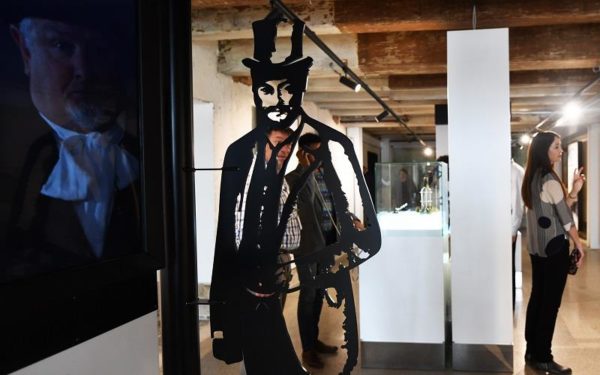
Plans to add further developments to the structure are being made by the City in efforts to draw in more locals and tourists.
“In addition to the exhibitions, the City’s Property Management Department is in the process of preparing a tender to secure a suitable tenant for the restaurant space located at the rear of the building, which will spill out onto Longmarket Street.”
History of the Old Granary Building
The building was ‘restructured’ during the 18 -19th century with the use of ‘quarried slate’, also known as Cape Town blue stone, due to the poorly-built initial foundations.
Serving a variety of purposes, the building once functioned as a magistrates court, the town granary, a women’s prison, and a Public Works Department for civil engineers.
The Old Granary holds heritage links to the Castle of Good Hope, the Grand Parade and the City Hall.
This article was written by Ishani Chetty and sourced from CapeTown Etc.; for the original article, click here.